Tag: Launch

Nexus Launches World’s First Open Prover Network in Beta Testing
Nexus, a developer of a zero-knowledge virtual machine called zkVM written in Rust, has recently launched the first beta version of the Nexus network. This network is being touted as the world's first open...

World’s First AI Smart Ring for Wellness with Rewards System Smart Ring for Wellness: CUDIS...
CUDIS, a startup led by CEO Edison Chen, has unveiled the world's first AI smart ring designed to reward users for their wellness efforts. The CUDIS ring, operating on the Solana blockchain, offers advanced...

Hong Kong Exchanges to Launch Crypto Index in November 2021
Hong Kong Exchanges and Clearing (HKEX) has announced that they will be launching a virtual asset index series on November 15th. This index is aimed at providing investors with transparent and reliable benchmarks for...

Boost Ethereum Decentralization with Lido DAO’s Community Staking Module
Lido DAO has recently introduced its Community Staking Module (CSM) on the Ethereum mainnet, aiming to enhance decentralization within the network. This new module allows Ethereum stakers to become solo validators with just 2.4...

Ethereum ETFs Set to Launch Next Week Confirmed by Bloomberg Analyst
Ethereum ETFs are set to launch next week, according to a Bloomberg analyst. The Securities and Exchange Commission (SEC) is expected to approve spot Ethereum exchange-traded funds with trading expected to start on July...

Introducing Tequila (JULIO): The Latest SOL Meme Coin Launching Soon
Tequila (JULIO) is set to make its debut on July 10, 2024, bringing the spirit of Mexico's beloved distilled liquor to the world of cryptocurrency. With a total supply of 100,000,000 tokens, 90% will...

Arkham Intelligence Set to Launch Derivatives Exchange: Latest Update
Arkham Intelligence is making major moves in the crypto industry by planning to launch its own derivatives exchange, as reported by Bloomberg News. The platform's native token ARKM saw a 12% surge in response...
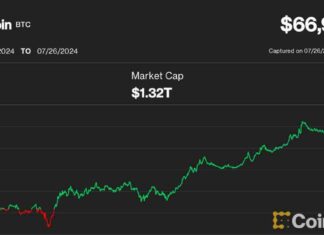
BTC Dominates Crypto Market as Ether Price Falls in Reflection of Bitcoin ETF Launch
Bitcoin stood out in the cryptocurrency market during the Asia trading session, gaining 4.4% and reaching $67,000 while the CoinDesk 20 Index rose by 3.3%. Other tokens like Solana's SOL, ether (ETH), BNB Chain's...

Venga Appoints Michael Stroev as CEO for All-in-One Crypto App Launch
Venga, a leading universal crypto app, has recently named Michael Stroev as its new CEO to oversee the launch of its all-in-one crypto app. Stroev, who previously held the role of COO & Head...

Solana Price Prediction for Poodlana (POODL) Launch – CoinJournal
Cryptocurrency enthusiasts are closely watching Solana (SOL) as it navigates through a volatile market, hoping for positive signs despite recent challenges. The price of SOL has experienced fluctuations, currently sitting at around $123.46, reflecting...